


Few legal controversies in modern American history have generated as much public attention as the Jeffrey Epstein case. Years after Epstein’s death, newly released documents—often referred to as the Epstein files—continue to fuel debate, raise questions about accountability, and dominate headlines. Among the many public figures mentioned in court records and media reports is former President Donald Trump, making the topic a focal point of political and legal discussion.
Understanding what the Epstein files actually contain—and what they do not—is essential in separating verified information from speculation.
What Are the Epstein Files?
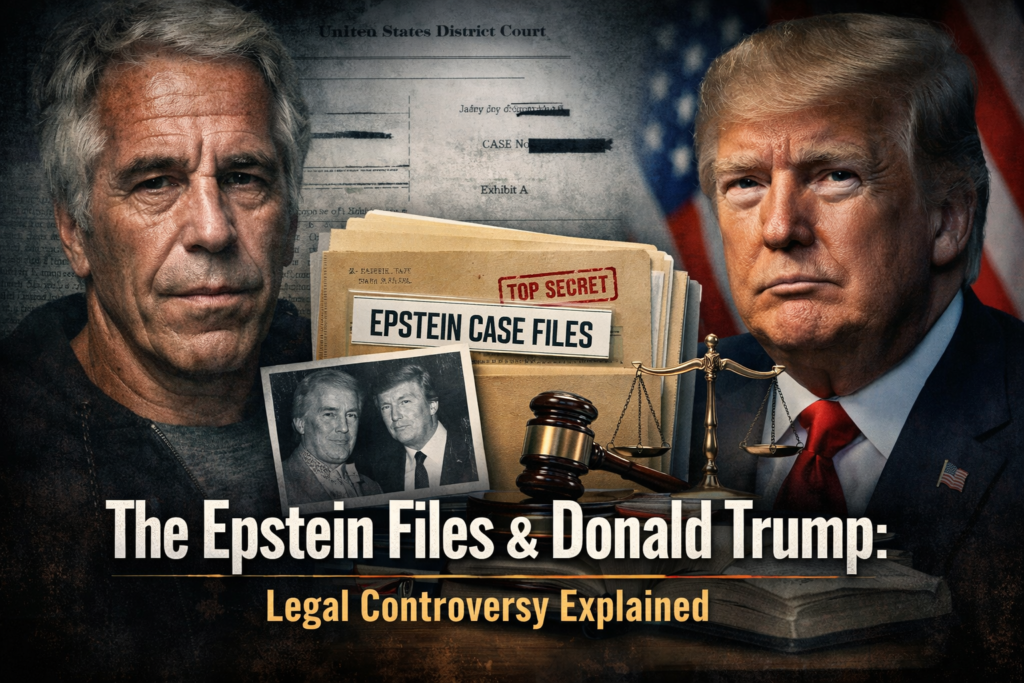
The term Epstein files generally refers to court documents, depositions, flight logs, contact lists, and unsealed records connected to legal cases involving Jeffrey Epstein and his associates. Many of these documents were released as part of civil lawsuits, including defamation cases and suits brought by Epstein’s accusers.
Important distinction:
- Being named in a document does not imply wrongdoing
- The files often include unverified claims, secondhand references, or contextual mentions
Courts have repeatedly emphasized this point.
Donald Trump’s Appearance in the Records
Donald Trump’s name appears in some Epstein-related materials primarily due to:
- Social and public interactions in the 1990s
- Photographs from public events in Palm Beach
- References in witness testimony describing Epstein’s social circle
Key facts often cited by major outlets:
- Trump has stated he ended his association with Epstein years before Epstein’s arrest
- Trump has publicly said Epstein was barred from Mar-a-Lago
- No court has found Trump liable or criminally responsible in connection with Epstein
As of now, no charges or legal findings connect Trump to Epstein’s crimes.
Why the Controversy Persists
Despite the lack of legal action against Trump, the controversy continues for several reasons:
1. Public Distrust
The Epstein case exposed systemic failures among elites, institutions, and enforcement bodies. As a result, the public remains skeptical of official conclusions.
2. Political Polarization
Trump’s role as a polarizing political figure intensifies scrutiny. Supporters and critics alike interpret the same documents very differently.
3. Incremental Document Releases
Each new batch of unsealed records reignites discussion, even when no new allegations emerge.
4. Media Framing
Headlines often emphasize who is named, not what is proven, which can blur legal reality.
Legal Reality vs. Online Narratives
Legally speaking:
- Evidence ≠ allegation
- Allegation ≠ charge
- Charge ≠ conviction
Courts rely on sworn testimony, corroboration, and due process—not public opinion or social media interpretation. Many Epstein-related documents were never intended to determine guilt but to provide background context.
Why This Matters
The Epstein files matter not just because of the individuals named, but because they raise broader questions:
- How powerful people are held accountable
- How victims gain justice
- How transparency and due process coexist
They also highlight the danger of trial-by-headline, where reputations are shaped without legal findings.
Conclusion
The Epstein case remains one of the most disturbing legal scandals of the modern era. While Donald Trump’s name appears in certain Epstein-related documents, there is no legal judgment or criminal finding connecting him to Epstein’s crimes.
Responsible coverage requires restraint, accuracy, and a clear separation between documented facts and speculation. As more records emerge, the focus should remain on verified information, accountability through lawful means, and justice for victims—not political point-scoring.