From Service to Cyber: How One Veteran Is Rebuilding Lives Through Opportunity
Every year, thousands of veterans take off the uniform for the last time—and step into a world that doesn’t always know what to do with them.
For many, the transition isn’t just difficult. It’s disorienting.
A steady paycheck disappears. Structure fades. Purpose becomes unclear.
And for far too many, that loss leads to something deeper—unemployment, depression, and in the worst cases, tragedy.
But leaders like Jesse Davis are working to change that story.
The Hidden Struggle After Service
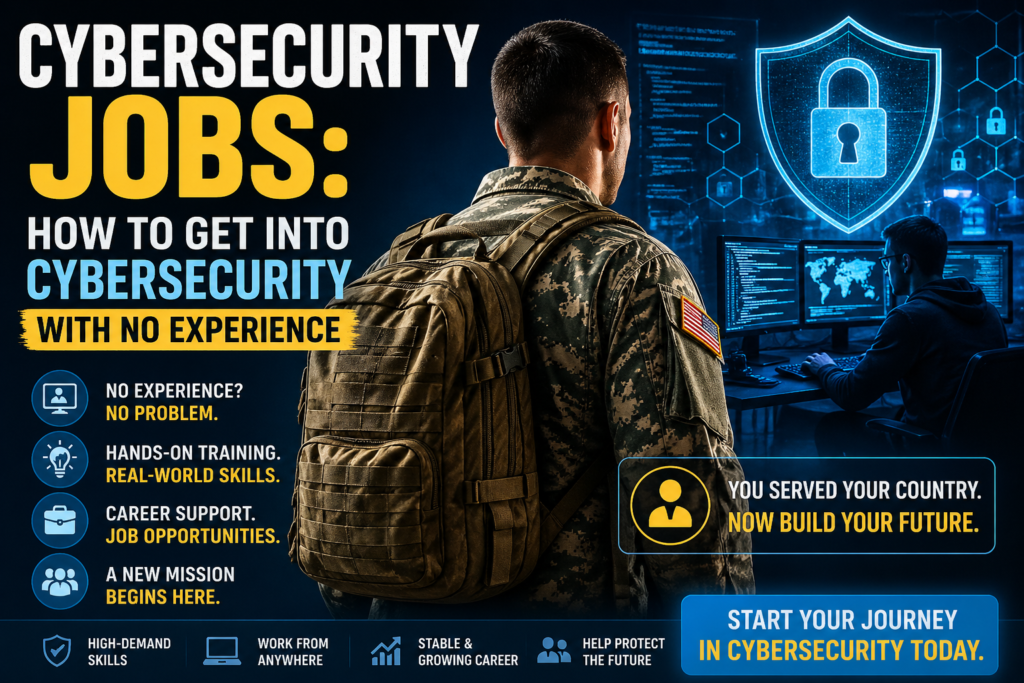
Each year, roughly 200,000 service members transition out of the military. On paper, many are highly qualified—trained, disciplined, and experienced.
But reality hits fast.
Despite degrees, certifications, and even top-level security clearances, many veterans struggle to find meaningful employment.
Jesse Davis knows this firsthand.
After leaving full-time service, he spent long days—sometimes 14 to 16 hours—applying for jobs with no success. Like many others, he found himself overqualified on paper, but locked out of real opportunities.
That’s when he realized something was broken.
The Real Problem: A System That Doesn’t Connect
The issue isn’t a lack of jobs.
In fact, cybersecurity alone has hundreds of thousands of open positions.
The real problem?
👉 Employers want experience
👉 But no one is offering a way to get it
Traditional education isn’t solving the gap. Students graduate with degrees—and debt—but without the hands-on skills employers demand.
As Davis puts it, other industries have figured this out:
- Doctors complete residencies
- Mechanics train through apprenticeships
- Architects gain real-world experience
So why not cybersecurity?
Building a Better Path Forward
Instead of waiting for change, Davis decided to build it.
Through his initiatives, he’s creating a system focused on:
- Hands-on training environments where students learn by doing
- Real-world simulations that mirror actual cyber threats
- Career guidance to help individuals navigate complex job markets
- Direct pathways into employment
This approach isn’t theoretical—it’s practical, immersive, and designed to produce results.
Because in today’s workforce, knowledge alone isn’t enough.
Experience is everything.
More Than Jobs: Restoring Purpose
But this mission goes deeper than employment.
For many veterans, the hardest loss isn’t income—it’s identity.
The military provides structure, mission, and meaning. When that disappears, it leaves a void.
That void can be dangerous.
Many veterans struggle with:
- Loss of direction
- Mental health challenges
- Substance abuse
- Social disconnection
Some never recover.
Davis is clear about what needs to change:
People don’t just need jobs—they need purpose.
By helping veterans build careers in cybersecurity, he’s doing more than filling job openings. He’s helping rebuild lives.
Why This Matters Now More Than Ever
The workforce is changing fast.
Artificial intelligence, automation, and global cyber threats are reshaping industries at an unprecedented pace.
At the same time:
- Job security is declining
- Layoffs are increasing—even for top performers
- Traditional career paths are becoming less reliable
The old formula—go to school, get a degree, find a stable job—no longer guarantees success.
That’s why new models are urgently needed.
A System Designed for Real Life
Davis’s approach challenges outdated thinking:
- Instead of passive learning → active, hands-on training
- Instead of unclear career paths → guided direction
- Instead of isolation → community and support
He’s also focusing on a group often overlooked: military spouses.
These individuals frequently sacrifice their own careers due to constant relocation. By offering remote-friendly cybersecurity training, they gain access to stable, flexible opportunities.
The Hard Truth About Success
There’s no sugarcoating it.
The path forward isn’t easy.
Davis emphasizes a mindset many avoid:
- You will hear “no”
- You will face rejection
- You will encounter setbacks
But success comes down to one decision:
👉 Stay down—or get back up
That resilience, often forged in military service, becomes the foundation for long-term success in civilian life.
A Mission Bigger Than One Person
At its core, this work isn’t just about cybersecurity.
It’s about:
- Rebuilding confidence
- Restoring dignity
- Creating sustainable futures
And it’s about ensuring that those who served their country are not left behind when their service ends.
How You Can Be Part of the Solution
Real change doesn’t happen alone.
It takes:
- Awareness
- Support
- Action
Whether it’s sharing opportunities, supporting training programs, or contributing to initiatives that empower veterans, every step matters.
Because behind every statistic is a person trying to rebuild their life.
Final Thought
The transition from military to civilian life shouldn’t feel like starting over—it should feel like moving forward.
With the right systems in place, it can be.
And with leaders like Jesse Davis pushing for change, that future is closer than ever.