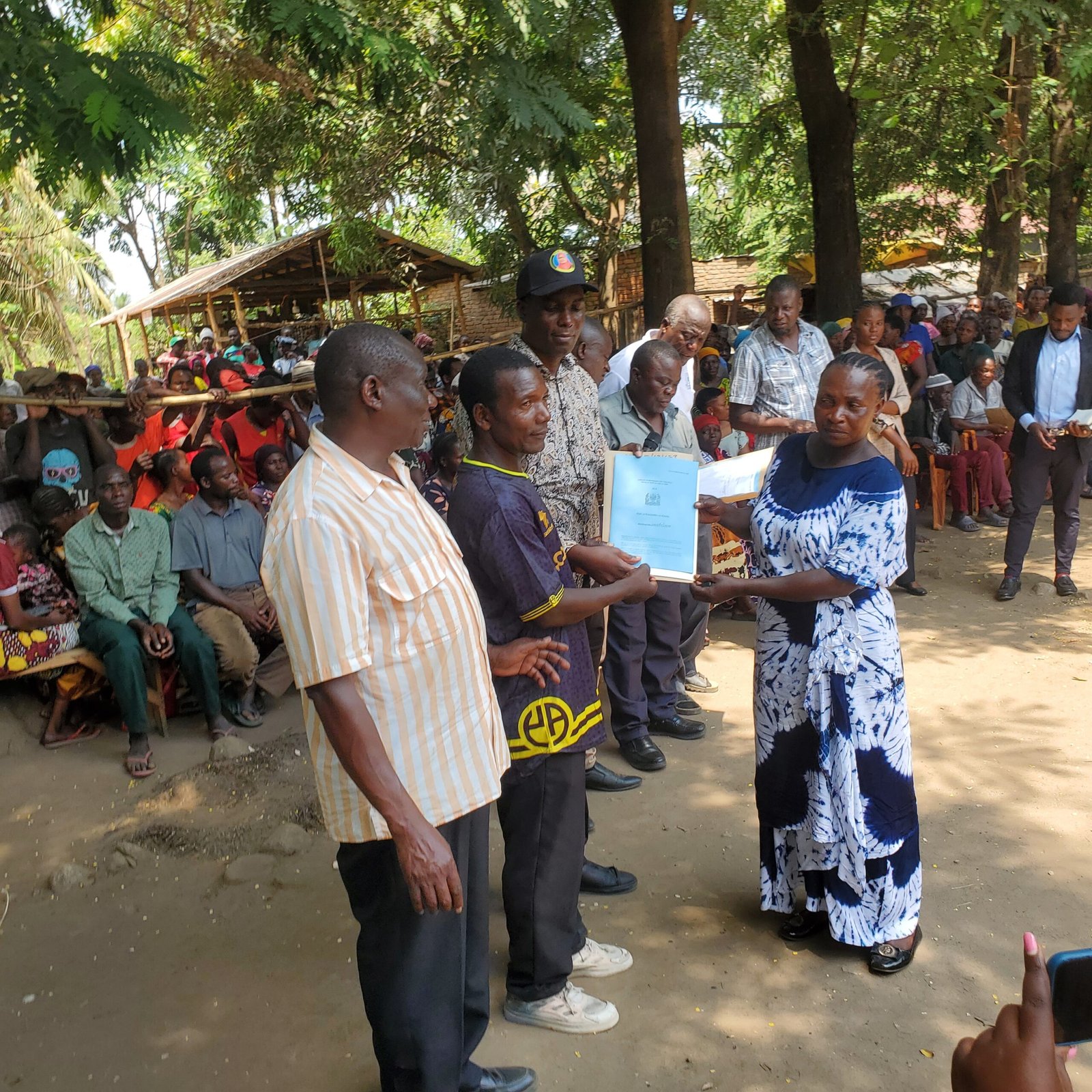
Importance of Land Formalization for Women, Youths and People with Disabilities and the Need to Implement the Project in Iringa Region
Land formalization, through the issuance of legally recognized land tenure documents such as Customary Certificates of Right of Occupancy (CCROs), is a critical intervention for promoting secure land rights, inclusive economic development, sustainable natural resource management, and social justice. Secure land tenure provides individuals and communities with legal recognition of their rights to own, use, inherit, and invest in land, thereby reducing the risk of land disputes, unlawful eviction, and land grabbing. It also creates an enabling environment for increased agricultural productivity, improved livelihoods, access to financial services, and long-term investments in sustainable land management.
The implementation of a land formalization project is particularly important for women, who often face barriers to land ownership due to discriminatory customary practices, unequal inheritance systems, and limited participation in land governance. Providing women with legally recognized land rights strengthens their tenure security, protects them from dispossession, and increases their decision-making power within households and communities. Women who possess CCROs are more likely to invest in agricultural production, adopt climate-smart farming practices, access agricultural extension services and financial institutions, and improve household food security and income. Secure land rights also contribute to gender equality and enhance women's economic empowerment.
For youths, secure land tenure creates opportunities for employment, entrepreneurship, and wealth creation. Many young people possess the skills and motivation to engage in agriculture and other land-based enterprises but lack secure access to land. Land formalization provides legal certainty that encourages young people to invest in farming, livestock production, agroforestry, irrigation, and agribusiness. Documented land rights also increase the possibility of accessing financial services and participating in government and development programmes aimed at supporting youth livelihoods, thereby reducing unemployment, poverty, and rural-urban migration.
Similarly, people with disabilities (PWDs) often experience significant challenges in accessing and protecting land due to discrimination, social exclusion, and limited access to legal services. Land formalization ensures that persons with disabilities enjoy equal legal protection over their land rights, reducing the risk of land grabbing, unlawful eviction, and exclusion from inheritance. Secure land ownership enhances their dignity, independence, and economic participation by enabling them to use land productively, lease it, or benefit from development initiatives that require proof of land ownership. Inclusive land governance also ensures that the voices of persons with disabilities are represented in land-related decision-making processes.
Beyond these specific groups, land formalization strengthens overall community resilience by reducing land conflicts, improving transparency in land administration, and encouraging sustainable investments in agriculture and natural resource management. Secure tenure motivates landholders to invest in soil conservation, agroforestry, irrigation, water harvesting, and other climate-resilient practices because they are confident that they will continue to benefit from their investments. This contributes to improved environmental conservation and long-term agricultural productivity.
Implementing a land formalization project in Iringa Region is both timely and necessary because the region's economy depends predominantly on agriculture and livestock keeping, making secure access to land essential for sustainable livelihoods. Despite the existence of the Village Land Act, Cap. 114, many rural households continue to occupy and use land without legally recognized tenure documents such as CCROs. This situation exposes farmers, pastoralists, women, youths, and people with disabilities to land disputes, boundary conflicts, inheritance disputes, and land grabbing, while discouraging investment in productive and sustainable land use practices.
Iringa is also experiencing increasing pressure on land as a result of population growth, agricultural expansion, livestock movements, urbanization, and the impacts of climate change, which have intensified competition over land and natural resources. In several communities, unclear village boundaries, overlapping land claims, and limited awareness of land laws contribute to recurring conflicts between farmers, pastoralists, and other land users. Implementing systematic land formalization through boundary adjudication, surveying, and the issuance of CCROs will provide legal certainty, strengthen village land governance institutions, reduce land-related conflicts, and promote peaceful coexistence among different land users.
Furthermore, secure land tenure is fundamental for strengthening climate resilience in Iringa Region. When landholders possess legally recognized rights, they are more willing to adopt sustainable land management practices such as soil and water conservation, agroforestry, afforestation, watershed protection, climate-smart agriculture, and compliance with Village Land Use Plans (VLUPs). These interventions improve agricultural productivity, reduce environmental degradation, and enhance communities' capacity to adapt to the increasing impacts of climate change, including prolonged droughts, erratic rainfall, and land degradation.
The proposed project also promotes inclusive land governance by strengthening the capacity of Village Councils, Village Land Use Management Committees (VLUMs), Village Adjudication Committees, Village Land Councils, and other local institutions responsible for land administration. Through awareness creation, capacity building, community participation, and transparent land governance, the project will ensure that women, youths, and people with disabilities actively participate in land-related decision-making processes and benefit equitably from secure land rights.
Overall, the project aligns with the National Land Policy (2023 Edition), the Village Land Act, Cap. 114, the National Five-Year Development Plan, the National Strategy for Gender Development, and Tanzania's commitments to the Sustainable Development Goals (SDGs), particularly SDG 1 (No Poverty), SDG 2 (Zero Hunger), SDG 5 (Gender Equality), SDG 10 (Reduced Inequalities), SDG 13 (Climate Action), and SDG 15 (Life on Land). By strengthening land tenure security and promoting equitable access to land, the project will improve livelihoods, increase agricultural investment, reduce land conflicts, empower vulnerable groups, enhance climate resilience, and contribute to sustainable socio-economic development across rural communities in Iringa Region.