Women’s health is more than doctor visits and diagnoses—it’s about how you feel every day, mentally, emotionally, and physically.
From stress and anxiety to hormonal changes and burnout, millions of women face challenges that often go unspoken. The good news? Small, consistent steps can make a real difference.
This guide shares practical, research-backed ways to improve mental health, build self-care habits, and support overall well-being.
🧠 Mental Health Matters More Than Ever
Studies from organizations like the World Health Organization show that women are more likely to experience anxiety and depression due to factors like stress, caregiving responsibilities, and hormonal changes.
Common signs to watch for:
- Constant stress or feeling overwhelmed
- Trouble sleeping or low energy
- Mood swings or irritability
- Loss of motivation
💡 Important: If these feelings last more than a couple of weeks, it may be time to seek support.
💛 Simple Self-Care Habits That Actually Work
Self-care doesn’t have to be expensive or time-consuming. In fact, the most effective habits are often the simplest.
Daily self-care ideas:
- Take a 10–15 minute walk outside
- Drink enough water (hydration affects mood!)
- Practice deep breathing or mindfulness
- Write down 3 things you’re grateful for
- Limit social media if it increases stress
According to the American Psychological Association, even small daily habits can significantly reduce stress levels over time.
⚖️ Understanding Hormonal Health
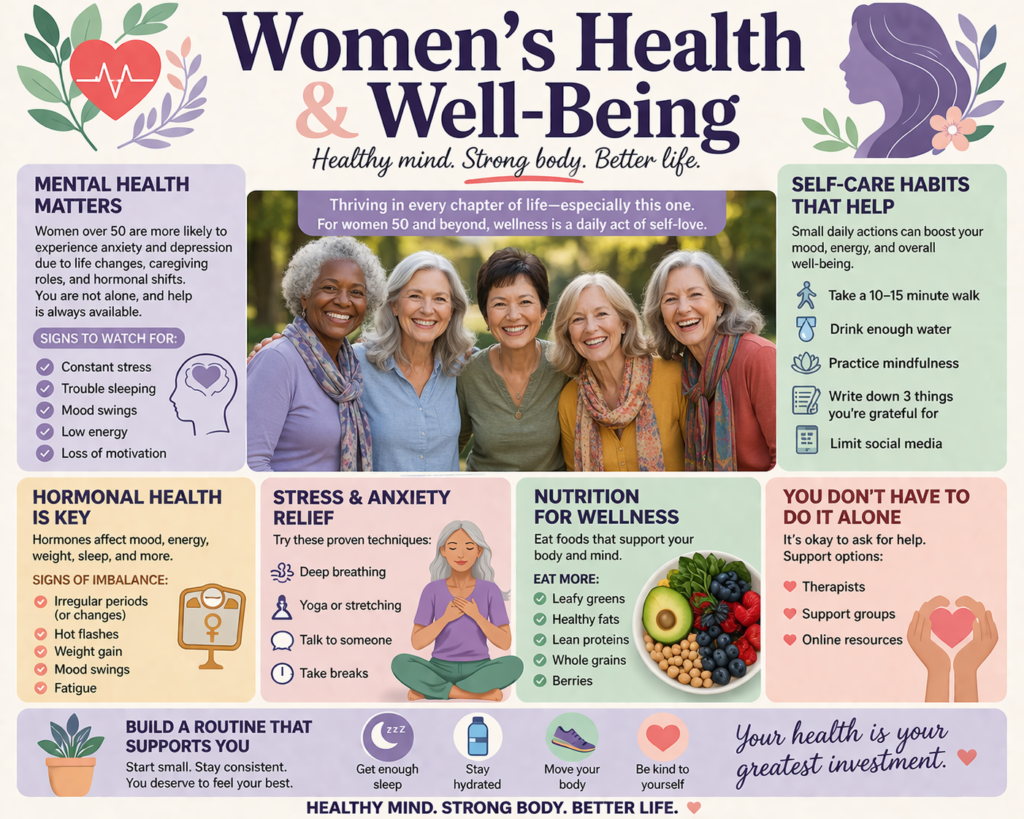
Hormones affect everything—from mood and energy to weight and sleep.
Signs of hormonal imbalance:
- Irregular periods
- Fatigue or brain fog
- Weight gain (especially around the abdomen)
- Anxiety or mood swings
Natural ways to support hormone balance:
- Eat whole foods (especially leafy greens and healthy fats)
- Get 7–9 hours of sleep
- Reduce sugar and processed foods
- Manage stress through relaxation techniques
💡 Hormonal health and mental health are deeply connected—taking care of one helps the other.
😌 Stress & Anxiety Relief Techniques
Chronic stress can impact both mental and physical health. The National Institute of Mental Health highlights stress as a major factor in anxiety disorders.
Try these proven techniques:
- Deep breathing (inhale 4 seconds, exhale 6 seconds)
- Light exercise like yoga or stretching
- Talking to someone you trust
- Taking breaks throughout the day
Even 5 minutes of intentional relaxation can reset your nervous system.
🥗 Nutrition and Women’s Wellness
What you eat directly affects how you feel.
Foods that support mental and physical health:
- Leafy greens (spinach, kale)
- Healthy fats (avocado, nuts, olive oil)
- Lean proteins (chicken, fish, beans)
- Whole grains
Avoid excessive:
- Sugar
- Processed foods
- Caffeine (if it increases anxiety)
🤝 When to Seek Help
There’s strength in asking for help. You don’t have to do everything alone.
Consider reaching out if:
- You feel overwhelmed most days
- Anxiety or sadness interferes with daily life
- You feel isolated or unsupported
Support options include:
- Licensed therapists
- Support groups
- Online mental health services
🌸 Building a Sustainable Wellness Routine
The key to long-term health isn’t perfection—it’s consistency.
Start small:
- Choose 1–2 habits to focus on
- Build a simple daily routine
- Track your progress weekly
💡 Over time, small changes create powerful results.
❤️ Final Thoughts
Women’s health is personal, complex, and deeply important. Taking care of your mental and physical well-being isn’t selfish—it’s necessary.
You deserve to:
- Feel balanced
- Have energy
- Experience peace of mind
Start small. Stay consistent. And most importantly—be kind to yourself.